Eureka Mills | yesterday

Is Your Flour Sprayed with Glyphosate Before Harvest? Here Is What You Need to Know

We get asked this question quite regularly, "Is your flour sprayed with glyphosate before you harvest it?"


It's a fair question, and one we think more South Africans should be asking. So, let us answer it properly, as a mill that's been in operations for over 27 years.


What Glyphosate Actually Is

Glyphosate is the world's most widely used herbicide, sold under brand names like Roundup. Farmers have relied on it since the 1970s to kill weeds, and in most cases it is sprayed early in the growing season, well before a crop is anywhere near ready to harvest.


The reason it comes up in conversations about food safety is the debate around its health effects. Some health bodies, including the World Health Organization's cancer research arm, have classified it as a probable carcinogen, while other regulators, including South Africa's, still permit its use within set limits. That disagreement is part of why so many people want to understand exactly how and when it ends up in their food, rather than simply being told it is "within limits" and leaving it there.


What Pre-Harvest Desiccation Actually Is

Glyphosate is best known as a weedkiller, but many commercial wheat farms also use it for something else entirely, drying out the crop just before harvest. This practice is called pre-harvest desiccation.


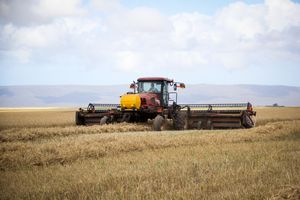
Here is how it works. A week or two before the combine harvesters move in, farmers spray the still-green or slightly damp wheat with glyphosate. The chemical kills the plant outright, which speeds up drying and lets farmers harvest earlier and more uniformly. It also helps control weeds that would otherwise slow down threshing.


For large-scale commercial farming, especially in wetter regions, this makes practical sense. It saves time, reduces spoilage risk, and makes harvest more predictable.


Why It Matters for What Ends Up in Your Flour

The problem is timing. Glyphosate applied as a desiccant is sprayed directly onto the grain itself, days before harvest, rather than earlier in the growing season on surrounding weeds. That means there is very little time for the chemical to break down before the wheat is cut, milled, and bagged.


Independent testing in several countries has found glyphosate residue in a significant proportion of wheat-based products on supermarket shelves, including bread and flour. Regulators set maximum residue limits and most tested products fall within them, but the science on long-term, low-level exposure is still being actively debated by researchers and health bodies. It is one of the most searched food safety questions for a reason: people want to know what is actually in their loaf.


Where Eureka Mills Stands

We do not pre-harvest desiccate, and we do not use glyphosate on our wheat at any stage.


Every bag of Eureka Mills flour is unbleached, GMO free, and lab tested to confirm it is free from preservatives, additives, and glyphosate. We work with trusted local farmers in the fertile Southern Cape who follow responsible, sustainable farming practices, and our wheat is slow milled using traditional stones, the same way it has been done since we started this mill in a shed back in 1998.


This is not a marketing angle we adopted because glyphosate became a talking point. It has been part of how we farm and mill from the beginning, because we believe good bread starts with flour you do not have to think twice about.


What You Can Do as a Home Baker

If this is the first time you have heard about pre-harvest desiccation, you are not alone, and you are not being dramatic for wanting to know more. A few practical steps:


• Look for flour that is explicitly labelled glyphosate-free or lab tested, not just "natural" or "unbleached," which do not mean the same thing.


• Ask your supplier directly. If a brand cannot tell you where their wheat comes from or how it is farmed, that is worth noting.


• Choose stoneground, minimally processed flour where possible. It will not remove pesticide residue on its own, but it usually signals a producer who is paying closer attention to the whole chain, from field to bag.


Real flour should not come with fine print. That is the whole reason we started Eureka Mills, and it is still why we do things the way we do.


Choose well. Choose stoneground.


Was this helpful? Share it with friends and family.

Eureka Mills